Free shipping on orders above R1000
Depending on where you reside, temperature is typically measured in Celsius or Fahrenheit. However, there's also the concept of light temperature, which is measured in Kelvins (K). For the more curious minds, in scientific and engineering contexts, Celsius and Kelvin are often discussed together. For more depth on this topic, a quick online search might be helpful, as delving into it here could complicate the article unnecessarily.
What is meant by light temperature?
Light or color temperature describes the hue of emitted light. A higher Kelvin value results in whiter light, often accompanied by a faint blue tint. Conversely, a lower Kelvin value produces a "warmer," more yellow-toned light.
Thus, a light with a Kelvin rating of 5000°K isn’t inherently brighter than one rated at 3000°K; the key distinction lies in the color of the light they emit.
Many experts agree that a higher Kelvin rating, when reasonable, is preferable. Kelvin values between 5500° and 6500° mimic daylight, which researchers suggest is ideal for nighttime driving as it helps reduce eye strain and fatigue.
Anything beyond 6500°K is generally considered unfavorable for vehicle lighting, as it emits an excessive blue tint that approaches the edge of the visible spectrum, ultimately leading to reduced visibility. This is the opposite effect of what is desired for optimal vehicle illumination.
Drivers of older vehicles with original equipment manufacturer (OEM) headlamps that have lower Kelvin ratings will be pleased to know there is a diverse range of aftermarket halogen and incandescent bulbs available that offer higher Kelvin ratings.
When shopping for globes or auxiliary lighting, remember to consider the Kelvin rating—it’s a choice your eyes will appreciate.
Whether it's a holiday or a long weekend, hitting the road for a getaway to your favorite camping site, beach, or fishing spot is a common delight.
Often, part of this journey might involve driving at night on rural or country roads, which are typically unlit and can be quite dark. This requires additional caution. With that in mind, here are some tips to ensure a safe and enjoyable nighttime drive.
First thing’s first
Before embarking on any road trip, perform a vehicle inspection—this should include a thorough check of all lights to ensure they're functioning correctly.
Keep it clean
Make sure your windscreen and mirrors are spotless. Smudged mirrors can create glare and obscure the outlines of vehicles behind you.
Carry spare globes
Globes should be included in your vehicle's spare parts kit; they are affordable, and you'll be grateful to have them available if you ever need a replacement.
Adjust your rear view mirror
This will minimize the glare from headlights of vehicles behind you reflecting in your mirror.
Don’t stare directly at oncoming lights
Headlights from other vehicles, particularly high beams, can temporarily dazzle you, impacting your vision and causing short-term blindness.
Dim your dash panel lights
When instrument panel lights are excessively bright, they can divert your attention and diminish your ability to see the road clearly.
Take breaks
Navigating the roads after dark demands heightened concentration, which can be exhausting. To combat fatigue, pause frequently to give your eyes a chance to rest and recharge.
Keep your eyes moving
Shifting your gaze across your field of vision instead of fixating on one spot can help alleviate eye strain.
If foggy don’t use high beams
High beams tend to reflect off fog, which can significantly impair your visibility. For drivers who frequently navigate through foggy regions, it is wise to invest in a set of fog lamps.
Add auxiliary lighting
Enhancing your vehicle's lighting system can significantly improve nighttime visibility. Based on your needs, you might consider installing extra lights or upgrading the globes and headlamp wiring for better performance.
From everyone at Autolume - stay safe on the roads.
The world of LEDs is vast and varied, with countless types serving distinct purposes. Some LEDs are mounted on bull bars, casting powerful beams hundreds of meters ahead. Others light up your vehicle's interior or dashboard. Additionally, there are those designed as headlamps, freeing your hands for tasks like working inside a dimly lit engine bay.
Vehicle owners exploring the vast range of aftermarket LED lighting, including driving lights, light bars, work lamps, or strip lighting, are bound to encounter some perplexing terminology. Performance is typically expressed in terms such as lux, lumens, total watts, or even the sum of individual LED power. Reliability is gauged by standards like IP ratings and operating temperatures. Additionally, it's crucial to factor in current draw, which impacts your vehicle's electrical system.
We aim to clearly explain some common LED terms to help you make informed purchasing decisions. But what is an LED light? Firstly, LED stands for Light Emitting Diode. This lighting technology is far more efficient than traditional halogen bulbs, using a semiconductor to illuminate by passing electrical current through it. It's no surprise that LEDs have rapidly gained popularity in aftermarket driving lights and are increasingly standard in new vehicle factory lighting.
Many lights highlight their peak power output in watts, leaving the impression that more watts equate to more light. However, this isn't always true. The wattage doesn't indicate how efficiently that power is utilized by the LEDs or the enclosure they are in. The lumen count of an LED light, either as a calculation (raw lumens) or a measurement (effective lumens), indicates the actual amount of light it emits. The higher the lumens, the more light it produces. For reference, a standard 60W household bulb produces about 800 lumens, while typical home lighting ranges from 1,000 to 4,000 lumens based on the room. Some LED driving lights boast outputs of around 15,000 raw (9,500 effective) lumens, showcasing their impressive power! However, a high volume of light doesn't guarantee it's directed where it's needed most.
In addition to lumens, you'll often encounter a specification called LUX. While lumens measure the total quantity of light emitted from a source, LUX measures the intensity or brightness of the light at a specific distance. For instance, an LED with a LUX rating of 1 at 900 meters means that a sheet of paper placed 900 meters from the vehicle would receive 1 LUX of illumination. At this level, an average person could read a newspaper. By considering power, lumens, and LUX together, you can more precisely assess and compare the performance of various LED lights. It's also important to consider beam patterns, as LEDs can be directed using different reflectors tailored for specific purposes.
The IP rating, or Ingress Protection rating, indicates how well a light resists water and dust intrusion. Numerous protection levels are available. An LED Driving Light with both IP66 and IP67 ratings is fully shielded from dust and can withstand powerful water jets from any angle, as well as brief immersion in water for up to 30 minutes, ensuring its durability and reliability in challenging environments.
Operating temperatures are quite straightforward; LEDs will function efficiently within the specified temperature range provided.
The input voltage range defines the minimum and maximum voltages at which a power supply can function effectively. For most vehicle LED lights, this typically includes 12V or 24V, with some designed to accommodate 12/24V or an extensive 9V-32V multivolt range—allowing the lights to operate on any voltage within these parameters.
Current draw refers to the peak number of amps an LED consumes, with the total wattage representing its overall power output. Although LEDs typically feature a lower power draw compared to alternatives like halogen and xenon bulbs, high-performance driving lights may still demand substantial power. It's crucial to monitor the current draw to ensure suitable installation with appropriate wiring, fuses, and relays. This attention helps prevent overloading your electrical system or undersupplying power to the lights.
Lastly, certain products may come with an ECE mention, a European testing standard evaluating RF (operating stress), transient immunity, and emissions. This standard is particularly crucial for industries using sensitive electrical equipment, as it ensures the lighting does not cause unwanted electrical interference.
With these LED terms decoded, you're now better equipped to make an informed LED lighting purchase.
Driving often becomes second nature, whether you're a novice or have years of experience. It's easy to overlook the challenges we face each time we take the wheel. Factors like nightfall, rain, sudden storms, and slippery roads all introduce conditions that require preparedness. As summer fades and daylight hours dwindle, consider these key reminders before you start your car and while you're driving.
Regardless of the vehicle you’re operating, it's essential to perform a brief inspection before leaving your driveway. While you don't need to do this every single time you drive, conducting these checks on a weekly basis can help ensure your safety on the road.
Not being able to see clearly is hazardous, and if others can't see you, the risk is even greater. Ensure that all your headlights, taillights, indicators, and daytime running lights (if available) are working properly. This enables you to see and be seen, as well as effectively communicate your intentions at roundabouts, intersections, and during lane changes.
Regularly clean all glass surfaces and mirrors. Smudges and dirt can hinder your visibility through the windshield and rear window, while also increasing glare from headlights of other vehicles.
Adjust them correctly to minimize headlight glare. Many vehicles feature an anti-glare tab or button on the rearview mirror; experimenting with this during night driving might make your experience more comfortable.
Vehicles typically offer the ability to adjust the brightness of the dashboard, infotainment screen, and other interior lights. Many models can even make these adjustments automatically. At night, overly bright lights can cause eye strain or divert your attention from the road.
Is your spare wheel in good shape? Have you stocked spare fuses and bulbs? Bringing along a flashlight or inspection light can be invaluable for repairs or part replacements. Always have a safety triangle on hand; it's essential if your vehicle ends up stranded on the roadside.
Ensure that your tyres have adequate and appropriate tread. While slick tyres are suitable for Formula 1 drivers, even F1 teams switch to treaded tyres under wet conditions. The tread channels water away, preserving traction. Without proper tread, tyres become hazardous on wet surfaces, increasing the risk of accidents.
This might seem like an odd question, but some errands, like shopping trips, can be postponed. If you're uneasy about driving at night or in challenging conditions, it's wise to stay off the road. Confidence, balanced with caution, is essential for safe driving, ensuring your focus remains where it matters most.
Headlights are essential for night-time driving and should also be used in conditions like wet weather to enhance your visibility to others. A useful rule of thumb: if most drivers have their lights on, it’s wise to do the same. If you find that your headlights are not providing sufficient illumination, even when clean, consider upgrading to performance globes for improved lighting.
When driving in rural areas without vehicles ahead, it's advisable to use your high beams for better visibility. However, remember to dim them as other cars approach. In foggy conditions, refrain from using high beams, as the light may reflect off the fog, causing glare and further reducing your visibility.
Seatbelts are lifesavers, and the effectiveness of your car's airbags during an accident hinges on them being properly worn. As the driver, it's your responsibility to make sure every passenger is securely strapped in. There's absolutely no justification for neglecting to wear a seatbelt!
Put that text message on hold! Should you need to make an urgent call or text, pull over safely or have a passenger handle it. Keep in mind that glancing at your phone means taking your eyes off the road. Distracted driving due to phone use is a leading contributor to road accidents.
Keeping a larger distance between your car and the vehicle ahead provides you with additional reaction time for unforeseen events, such as sudden braking or encountering a slick road that extends stopping distances.
When embarking on a lengthy drive, plan to make several stops along the way. A quick 15-minute power nap can be a lifesaver. Find a safe place to pull over, catch some rest, and perhaps enjoy a cup of coffee. Share the driving duties with your passengers—there’s no harm in taking a break!
Safe driving from the team at Autolume.
Have you ever wondered about the terms "lux" and "lumen" when it comes to lighting? Let's break it down in an easy to understand way.
In essence, a lumen refers to the total amount of light that is emitted by a source. Itʼs like measuring the entire volume of light that a bulb gives off. On the other hand, lux measures how bright that light actually appears on a surface. To put it simply, lux tells you how intense the light is when it reaches an area.
If you want a bit of science behind it, the lumen originates from the light created by a standard candle. As for lux, itʼs a bit tricky—it refers to one lumen of light evenly spread over a space of one square meter. So now you know the basics of these two important lighting terms.
Letʼs look at a few examples to make things clearer! Consider a standard 55w or 60w halogen bulb, commonly used in headlamps. These bulbs emit around 1,500 Lumens, and most of the light shines out onto the road. Typically, both the High Beam and Low Beam settings have similar Lumen outputs. However, we often think of High Beam as brighter and longer-reaching than Low Beam. Why is that? Well, Low Beam spreads its light more widely to illuminate a larger area, while High Beam focuses its light into a tighter, longer-reaching beam. Even though both settings have similar Lumen counts, High Beam achieves a greater Lux at a certain distance. So, while Lumen reflects the total light output, Lux tells us how concentrated that light is in a specific spot.
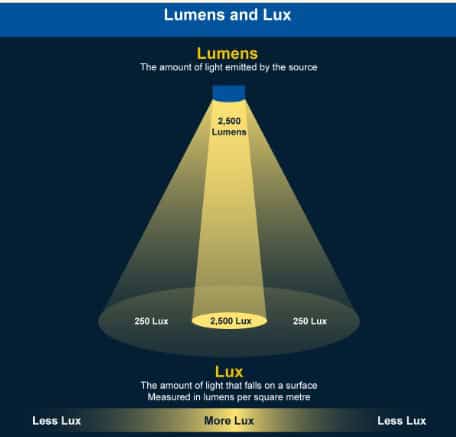
On the flip side, driving lamps are all about sending that light down the road as far as possible, which is where Lux comes into play. Lux measures how intensely that light reaches a specific point at a distance. Did you know that 1 lux is considered bright enough to read a newspaper? Thatʼs why most lights are measured for how far away they can shine at least 1 lux on a surface. For example, if a light is rated at 1 lux at 900 meters, it means if you held a piece of paper up 900 meters away from the light, it would receive just enough illumination (1 lux) for you to read it comfortably.
When we think about work lamps and driving lamps, thereʼs a neat tradition behind how we measure them, and it really clears things up! Work lamps usually get their measurement in Lumens, which indicates the total amount of light they produce. This makes sense because a wide flood work lamp doesnʼt need to concentrate its light into a tiny spot; itʼs all about spreading that brightness evenly over a broader area.
The exciting rise of L.E.D.-based driving lights and bars has brought both Lux and Lumen into the spotlight when it comes to performance! These modern lights tend to shine a bit wider than traditional Halogen or HID lamps, but not quite as broadly as a work lamp. This unique positioning can make it a little tricky to compare Lux and Lumen measurements. However, the best L.E.D. options out there offer a fantastic combination of high Lumen output and impressive 1 Lux distances, which means you get the best of both worlds – a nice wide beam that also reaches far.
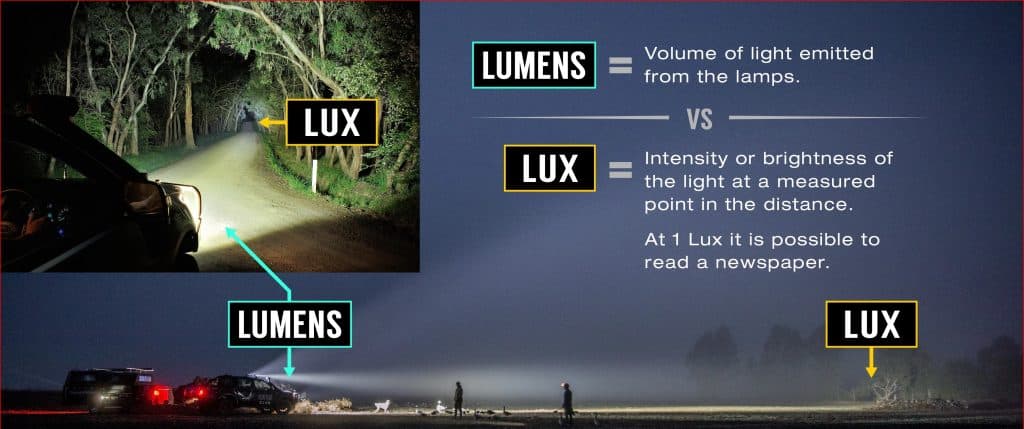
To truly grasp how a light performs, it's important to understand both Lumen (which indicates power) and Lux (which focuses light). Of course, there are other factors to consider, such as beam angle and color rendering, that play a role in creating a fantastic light experience—but thatʼs a conversation for another day.
